VTV.vn – Vietnamese durian is gaining broader access to the Chinese market. According to forecasts, exports of the “King of Fruits” to the world’s most populous market are expected to surpass USD 10 billion within the next few years.
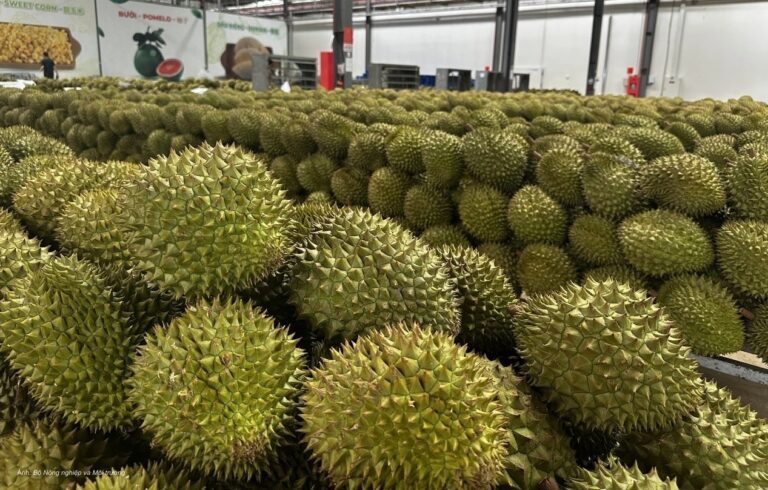
Vietnam’s frozen durian exports are projected to reach USD 300 million in 2024, provided that export enterprises complete the required registration procedures and begin shipments as soon as possible.
Export Value Expected to Exceed USD 10 Billion
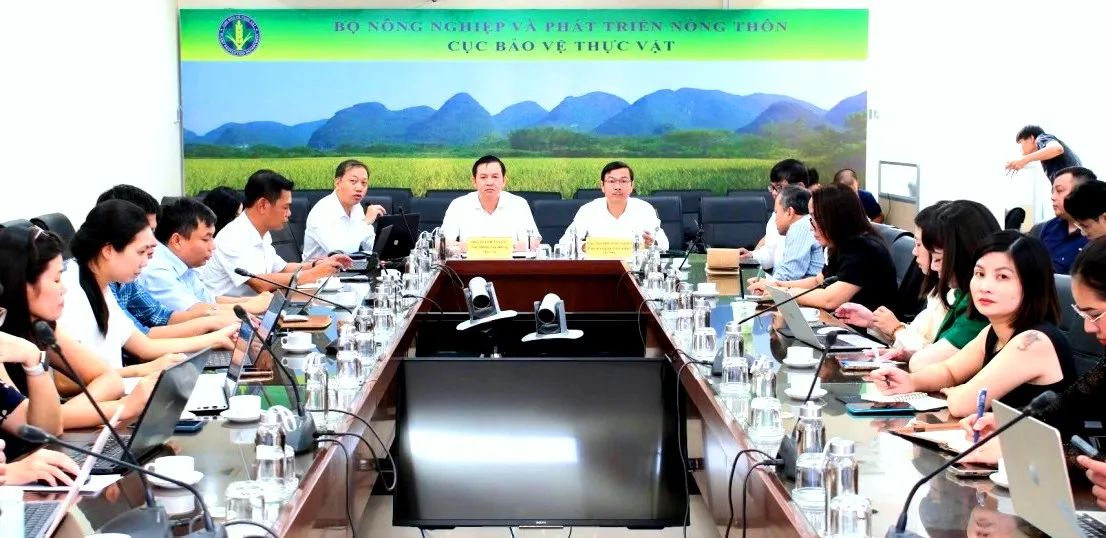
Speaking at the Conference on Regulations for Exporting Frozen Durian to the Chinese Market on the morning of September 19, Mr. Nguyen Quang Hieu, Deputy Director General of the Plant Protection Department, stated that China is currently Vietnam’s most promising market for both fresh and frozen durian exports.
“Since August 2024, China has officially opened its market to Vietnamese frozen durian following the signing of a protocol permitting imports of this product category. This represents a golden opportunity for Vietnam’s durian industry, helping increase the value of the fruit while reducing the risks associated with relying solely on fresh durian exports,” Mr. Hieu explained.
According to the Plant Protection Department, based on the newly signed protocol, Vietnam’s current production capacity, and strong demand from the Chinese market, frozen durian exports are expected to generate approximately USD 300 million in 2024, provided that eligible enterprises complete the registration process promptly and are able to commence exports without delay.
Notably, representatives of the Plant Protection Department estimated that China imports approximately USD 7 billion worth of fresh durian each year. Within the next few years, Vietnam’s durian exports to the Chinese market are expected to exceed USD 10 billion in value.
Industry experts remain optimistic about the strong growth potential of frozen durian. Fresh durian consists of only around 30% edible flesh, while the remaining 70% comprises seeds and rind, which must be discarded and may contribute to environmental waste. As a result, consumer demand in China is expected to gradually shift toward frozen durian products.
Frozen durian offers several advantages, including a significantly longer shelf life. It can be consumed directly after thawing or used as an ingredient in a wide range of processed food products, making it an increasingly attractive option for both consumers and food manufacturers.
Providing additional information on storage requirements for frozen durian, leaders of the Plant Protection Department explained that, in the initial draft of the protocol, China proposed that frozen durian be stored under cold conditions for eight hours. After reviewing the regulations applied in Thailand and Malaysia, Vietnam proposed a storage requirement of –18°C for one hour, a condition that better accommodates the application of rapid deep-freezing technology. This modern freezing technology helps preserve the fruit’s freshness, flavor, and quality for an extended period.
A Key Requirement: Frozen Durian Is Classified as a “Food Product”
Despite the significant export opportunities, Vietnamese durian exporters still face various challenges and regulatory barriers in the Chinese market, particularly regarding traceability, food safety, and quality control.
Mr. Nguyen Quang Hieu emphasized that one of the most important differences for frozen durian is that it is classified as a “food product.” Therefore, exporters must comply with China’s General Administration of Customs (GACC) Decree No. 248, which governs the registration and management of overseas food manufacturers exporting food products to China.
Under Chinese regulations, enterprises wishing to export frozen durian must register with and obtain approval from the Chinese authorities. Exporters are required to establish an effective Food Safety Management System (FSMS). Cold storage facilities must meet the prescribed standards, while the quality of water and steam used during production must also comply with food safety requirements.
After receiving an enterprise’s application, the GACC reviews the submitted documentation and publishes the results through the CIFER online registration system. Enterprises that satisfy all requirements will be granted a Chinese registration number. The registration certificate remains valid for five years from the date of issuance.
Commenting on this issue, Mr. Huynh Tan Dat, Director General of the Plant Protection Department, noted that China has established comprehensive and stringent regulations to ensure the safety of imported food products for domestic consumers. Therefore, Vietnamese enterprises should prepare complete documentation and fully comply with all regulatory requirements to facilitate smoother access to the Chinese market of more than 1.4 billion consumers.
In addition, information presented at the conference indicated that, in recent years, China has successfully developed commercial durian cultivation, with both planting area and production continuing to expand.
Currently, Hainan Province has nearly 2,700 hectares of durian plantations, mainly concentrated in the southern parts of the island, including Sanya, Baoting, Ledong, and Lingshui. It is estimated that approximately 270 hectares of durian orchards will be harvested this year, producing between 150 and 200 metric tons of fruit. Hainan’s durian harvest season typically runs from June to August, with peak production occurring in July.
According to industry experts, China’s current durian cultivation area and production capacity remain relatively limited and have not yet had a significant impact on durian exports from major supplying countries, including Vietnam. However, as market competition continues to intensify, Vietnam needs to adopt a long-term and sustainable development strategy for this multi-billion-dollar export industry.
Such a strategy should focus on improving product quality, strengthening food safety standards, ensuring traceability, and building a strong national brand for Vietnamese durian. These efforts will help enhance the competitiveness of Vietnamese durian and support sustainable exports to the Chinese market over the long term.